
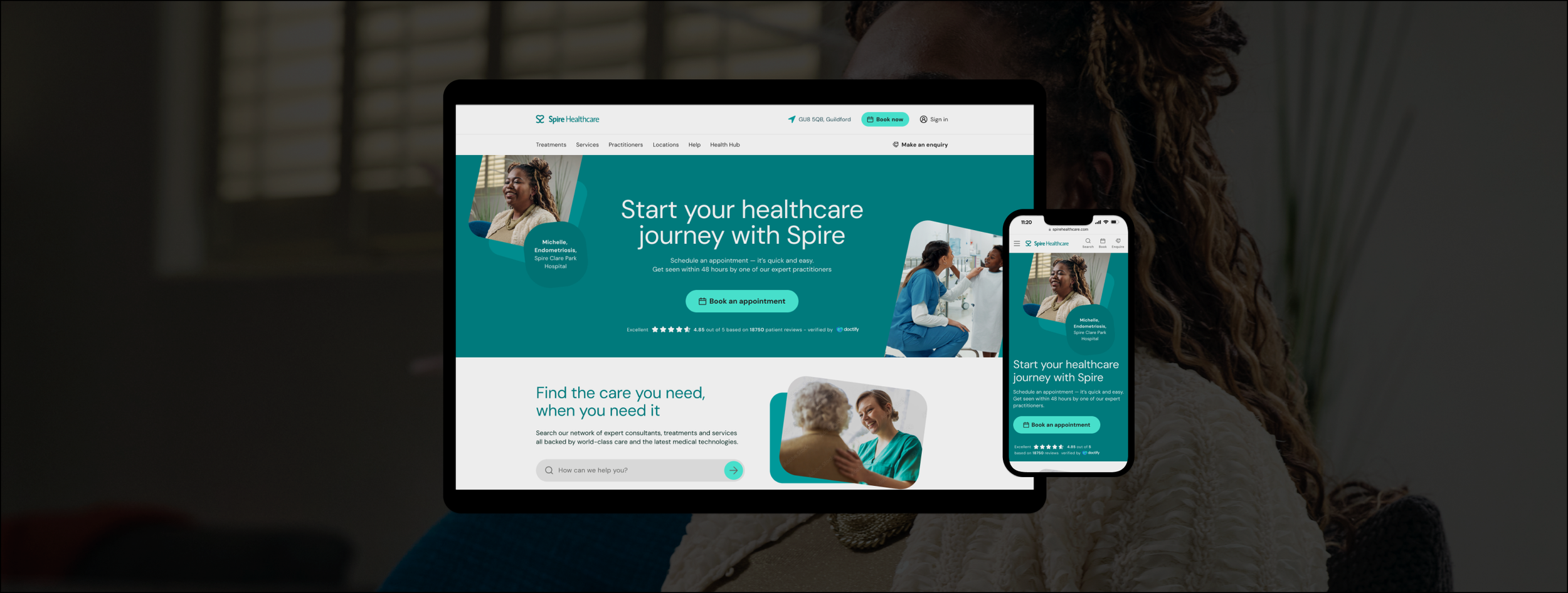
––– SPIRE HEALTHCARE –––
Navigating private healthcare shouldn't be hard.
Currently leading creative and design across an 18-month transformation programme spanning 90 Spire UK locations.
Role
Lead
UX/UI Design
Project
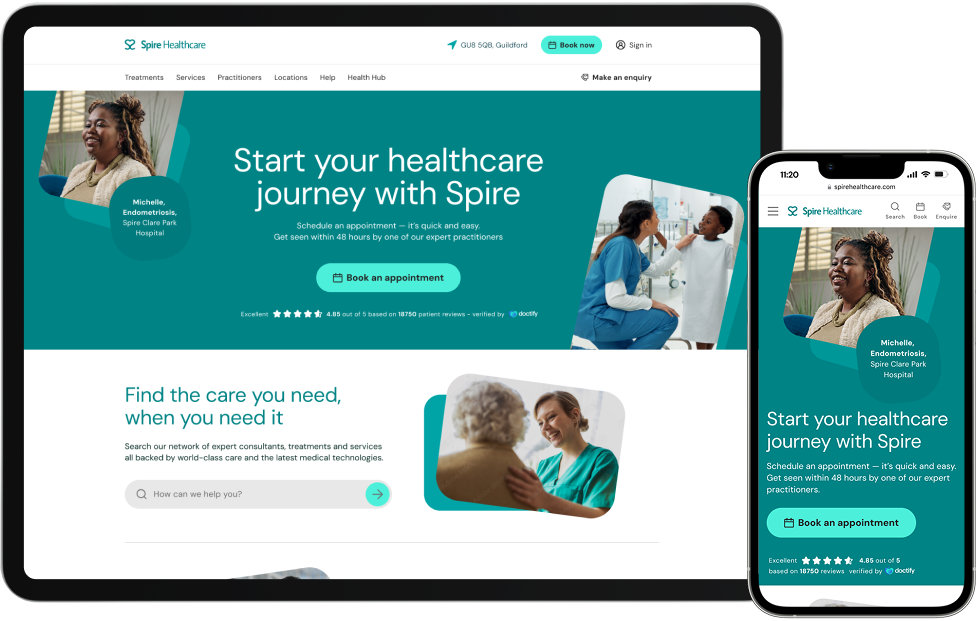
Website transformation
Consultant Partner
KPMG/KPMG Curve
Timeline
April 2024 - Current
Project role & responsibility
As Design Lead, I was responsible for the end-to-end product design, leading the project from discovery and concept through UX, UI, prototyping and delivery. For the first 6 months, I was the sole designer, establishing the product vision, user experience, interface design and design system foundations.
As the programme grew, I recruited and onboarded a Senior UI Designer and worked alongside Spire Healthcare's Senior UX Designer. I remained accountable for the overall design vision, quality and delivery across the programme.
Impact
+40%
uplift in online bookings
+25%
increase in organic web traffic
-35%
reduction in call-centre demand
Overview
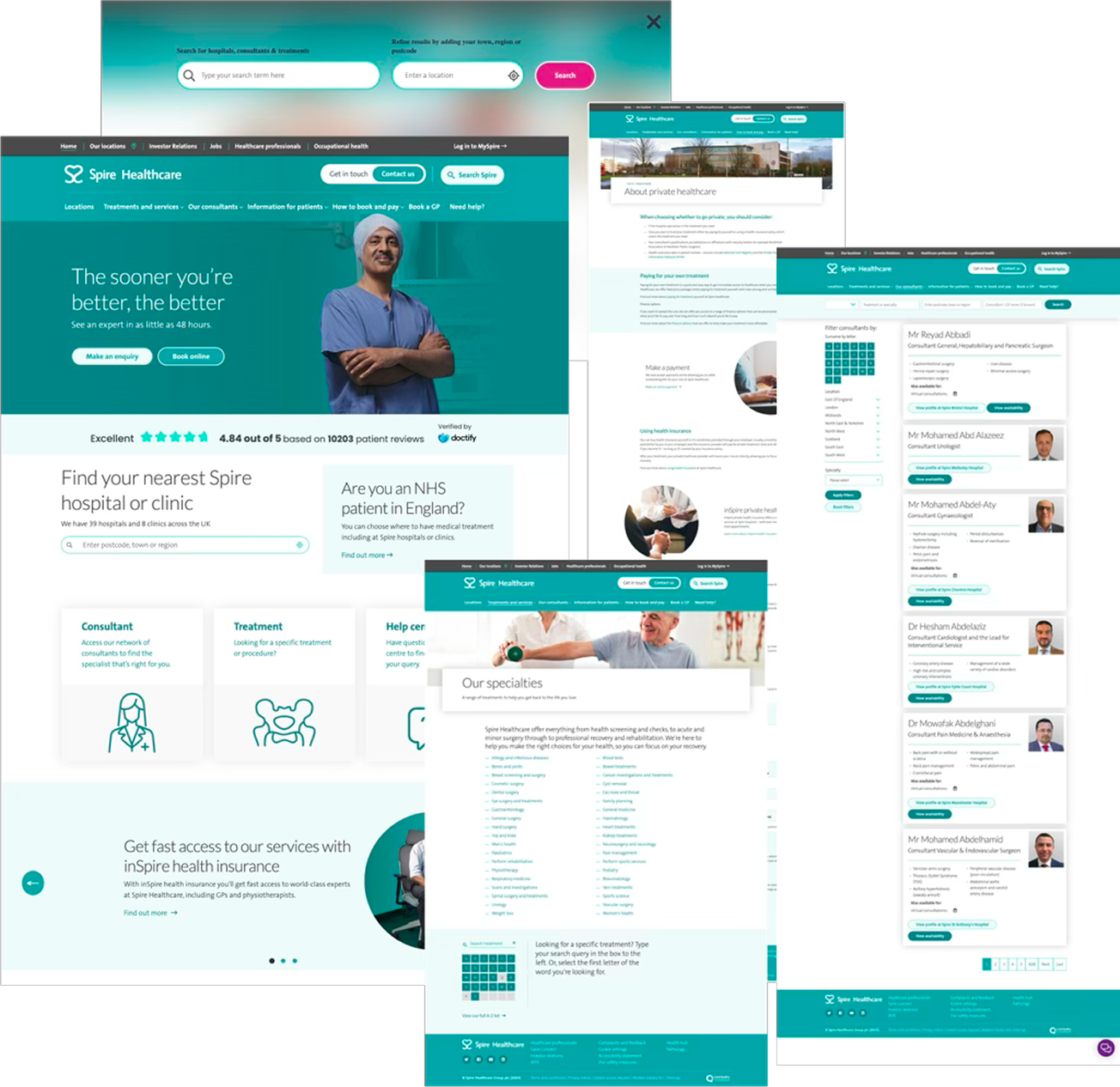
Spire’s digital platform spanned multiple hospitals, services, and specialisms, resulting in fragmented patient journeys, inconsistent information architecture, and high drop-off in online bookings.
Challenges
Fragmented IA — no consistent hierarchy across hospitals and services
Booking abandonment caused by a convoluted, multi-step online flow
Routine tasks forced through an overloaded call centre
Legacy CMS constraints preventing scalable content delivery
Research
Research focused on uncovering systemic barriers rather than isolated pain points
Patients struggled to understand next steps and journey paths
Convoluted booking system caused abandonment
Existing navigation and IA did not reflect user mental models
Mobile-first interactions were critical for usability and speed
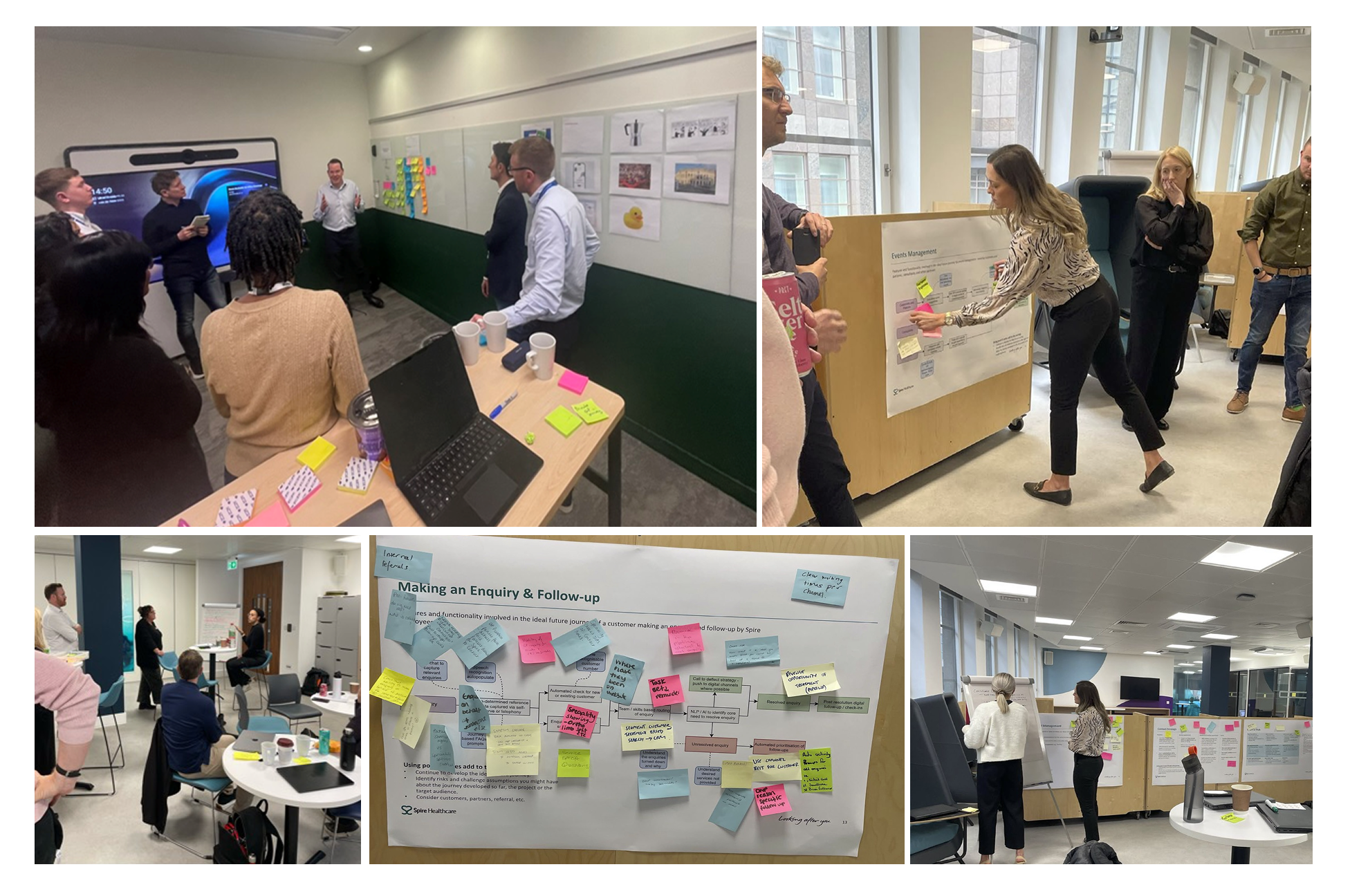
Stakeholder workshops
Insights informed
IA restructuring
Guided flows
Simplified communication
These ensured a confident & frictionless patient experience.
Midway through discovery, pressure mounted to begin wireframes before the IA was validated. I held the position to validate IA, a decision that prevented a significant structural rework three months later.
Design execution
Design ideation and iterations were structured around generating:
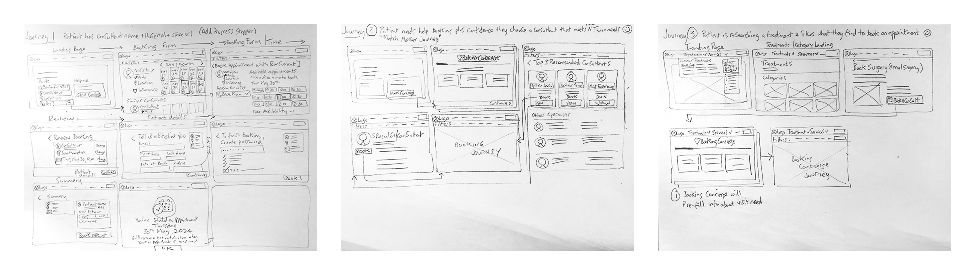
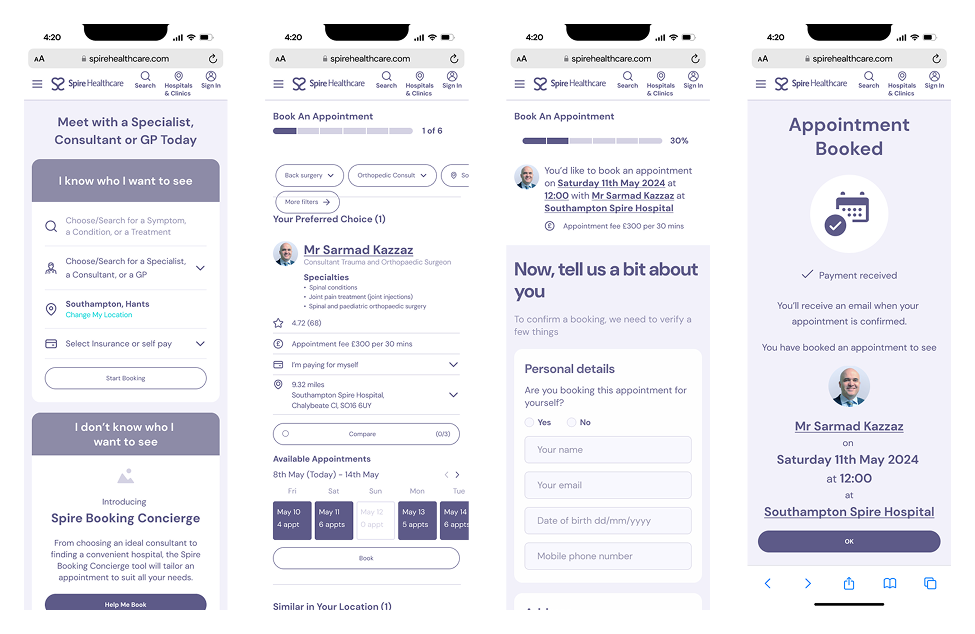
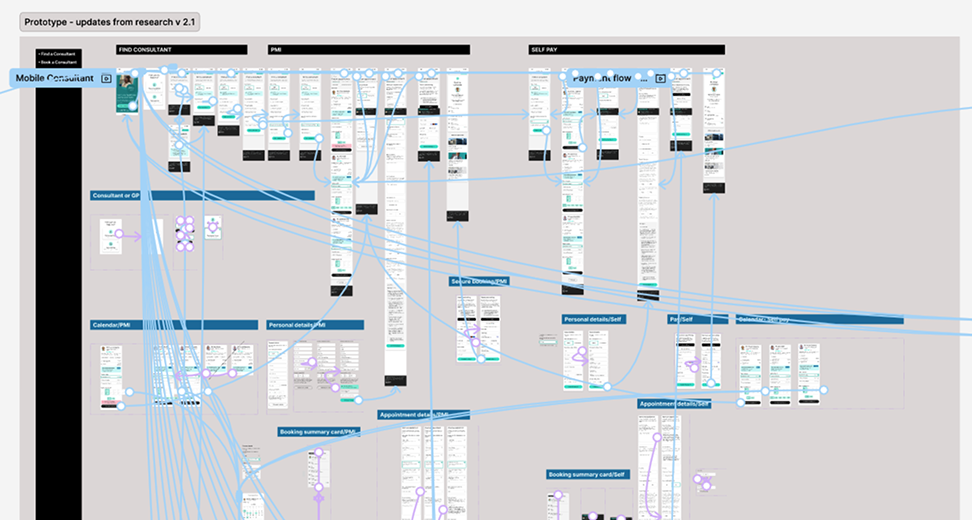
Pencil sketches –> Hi-fidelity wireframes –> Interactive prototypes
Usability testing
A series of moderated and unmoderated customer usability tests were run that surfaced key insights for
Booking journeys
Navigation and IA
Search
Summary of findings were taken and used to further improve the experience.
Design solutions
The pillars that transformed the patient experience
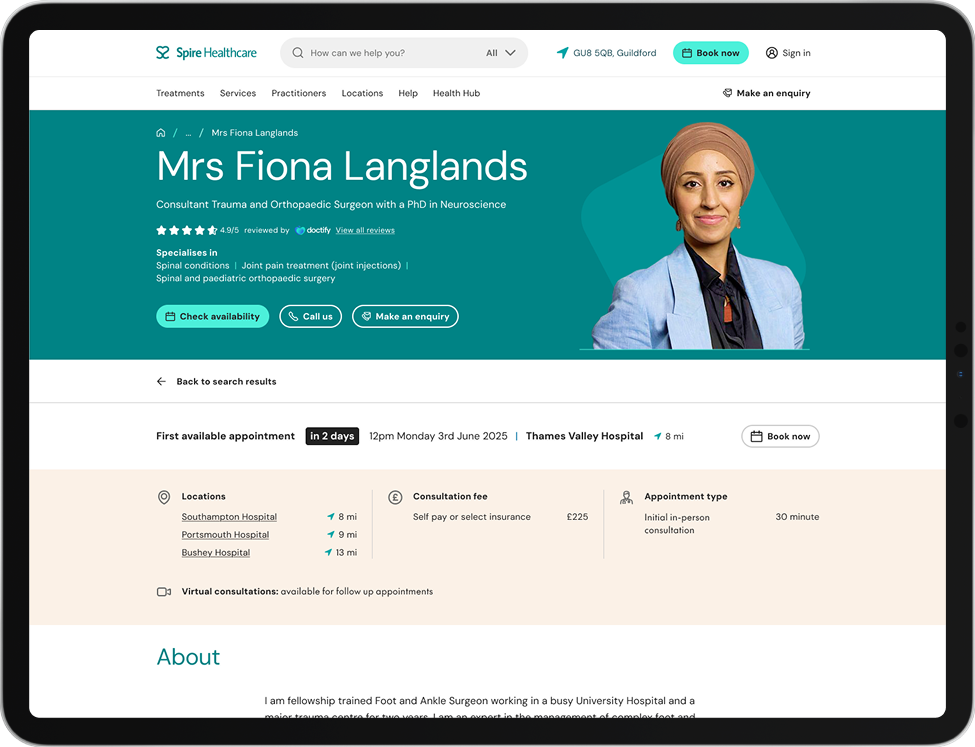
The design transformation was structured around 4 strategic pillars:
1
Booking and Conversion
A guided booking flow designed for both confident users and those who need help choosing
Mobile-first design
Consultant comparison tool [NEW]
Real-time appointment visibility
Integrated payments and reminders
Automated confirmations and CRM sync
2
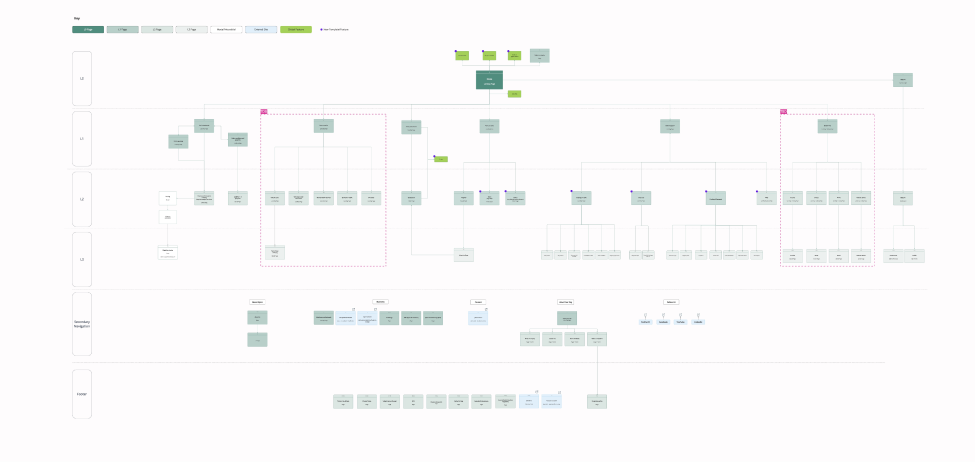
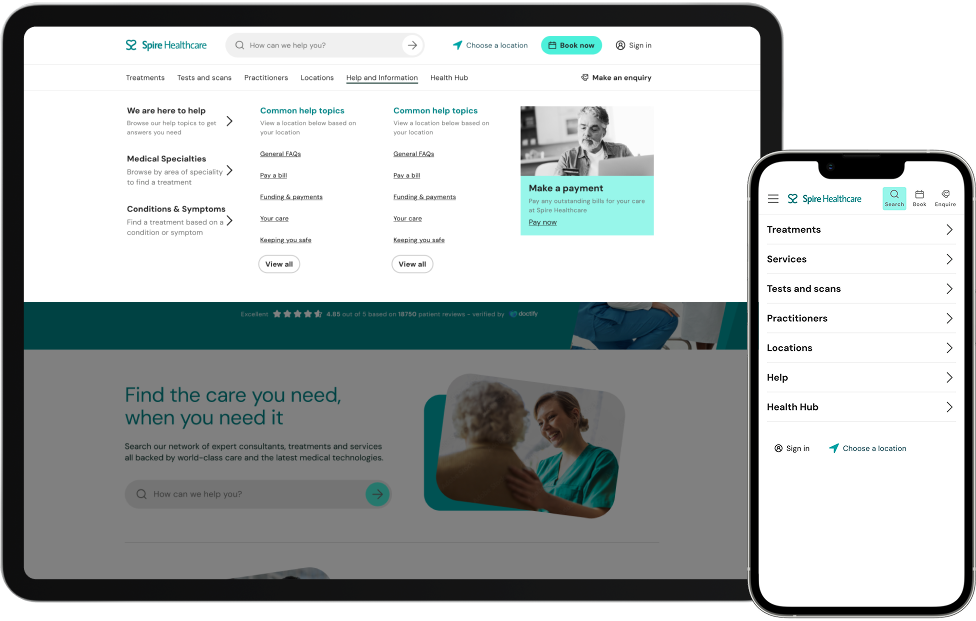
Information Architecture and Navigation
Simplified IA aligned to patient needs, consistent across hospitals and services, scalable for future content
Location setting for personalisation
Flexible mega-menu L1/L2/promo structure
Simplified nomenclature
3
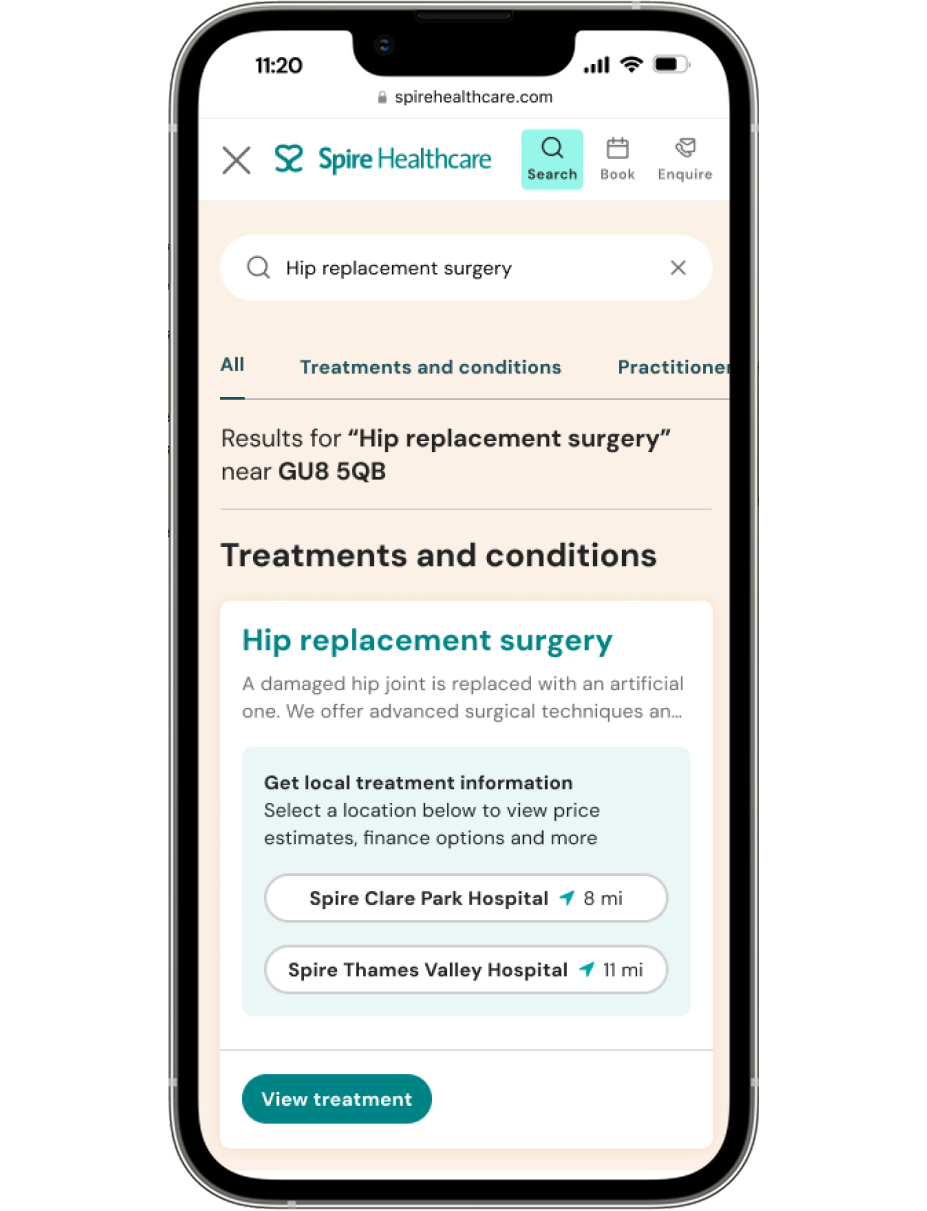
Search and Discovery
Predictive, intent-aware search with location-based filtering for faster access to treatments and specialists.
Autocomplete with common queries
Personalised results by location and intent
Smart filters for patient needs
4
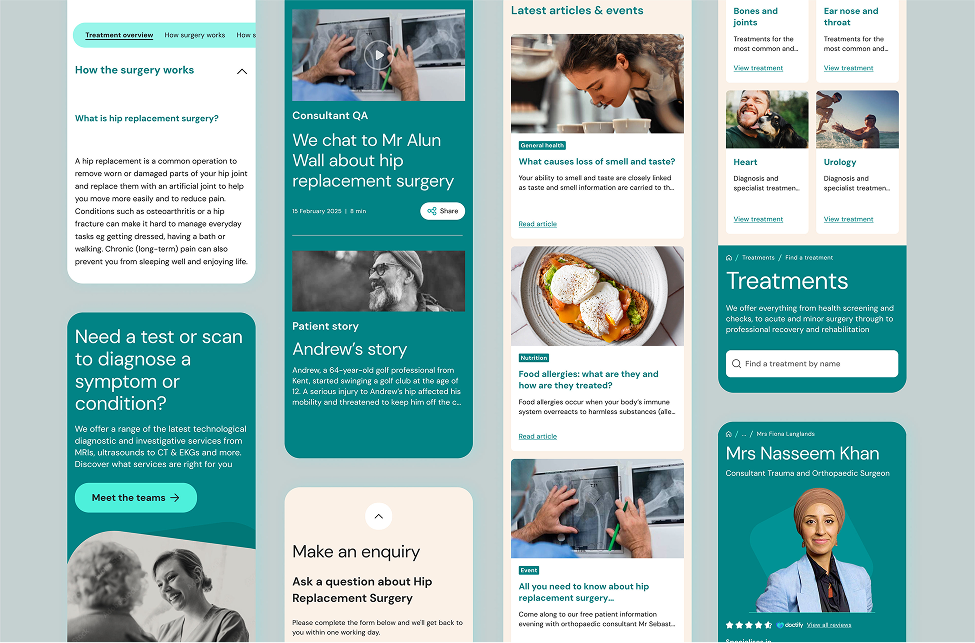
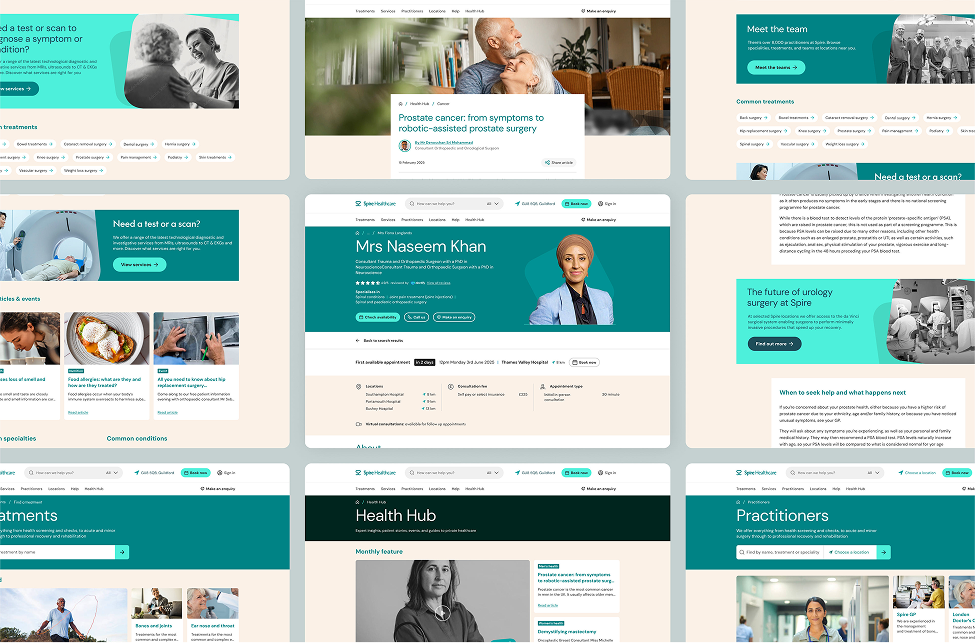
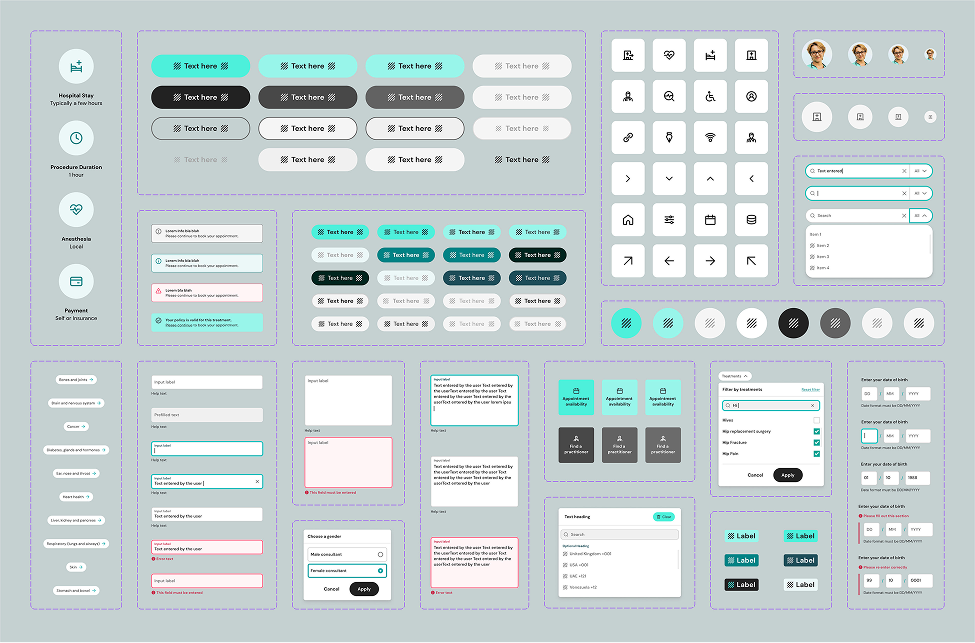
Design System and Visual Rebrand
To ensure consistency and scalability across all digital touch points a comprehensive Design System was developed and aligned with Spire Healthcare’s visual rebrand. Reusable components and interaction patterns were developed for:
– Consistency
– Accessibility
– Efficient delivery of future features
Results
Online bookings increased 40% within six months of launch, with a 35% reduction in call centre demand.
Reflection
Early IA validation prevents costly redesign cycles
Simplifying complex medical language significantly improves conversion
Hands-on craft alongside strategic leadership drives credible, actionable design decisions
Scalable design systems and IA are critical for enterprise digital platforms
Tools & platforms

Figma

Claude + Claude MCP

Photoshop, Illustrator, Firefly, After Effects, Acrobat Pro , In Design

ChatGPT

Azure Dev oPS

Miro

Optimizely
Team credits
Design Tim Wolf (Lead), Omair Barkatulla (UI), Joby Bridgen (UX)
Engineering Rob Newman (Principle), Sophie Jackson-Lee (Senior dev), Raja Chandran (Dev)
Testing/Accessibility Michael Close (Lead), Shyam Chandar (Senior QA)
Delivery James Surgeon (Director), Chee Lau (Lead), Aine Pilkington-Scott (Manager)
Delivery Support KPMG Tech Strategy & Curve Cloud Teams